Fintech
MAKKER
A UX-driven solution to help newcomers navigate the danish system
built through research, UX strategy, testing, and iteration design.
INTRODUCTION
Makker is a personal helper app designed to support newcomers living in Denmark. The project was born from my own experience navigating Danish systems with limited guidance, scattered information and complex language. Over the course of 1.5 years, I researched real user pain points, explored solutions, and designed an app focused on clarity, accessibility and emotional relief. Makker is not a fully finished product, but a realistic and research-driven concept built to solve a real problem.
This project began from lived experience. When I moved to Denmark, navigating taxes, insurance, A-kasse, MitID, healthcare registration, and other public services required extensive independent research. Information was spread across multiple official platforms, often written in technical language, sometimes only available in Danish, and rarely connected in a way that reflected a newcomer’s real-life journey.
The challenge was not the absence of information — it was fragmentation. My partner and I spent countless hours cross-checking websites, verifying requirements, and trying to ensure we were not missing critical deadlines. The margin for error felt small, and the emotional weight of “getting it wrong” was constant.
This issue extends far beyond a single experience. Denmark has a significant foreign-born population, representing around 12% of residents. Each year, approximately 12,000 study-related residence permits are issued, and many international graduates remain in the country to work and contribute to the labor market. In Aarhus alone, more than 50,000 students live in the city, with thousands coming from abroad.
These individuals are highly capable — yet they must navigate systems that were not designed with them in mind. Makker aims to bridge that gap by restructuring complexity into clarity.
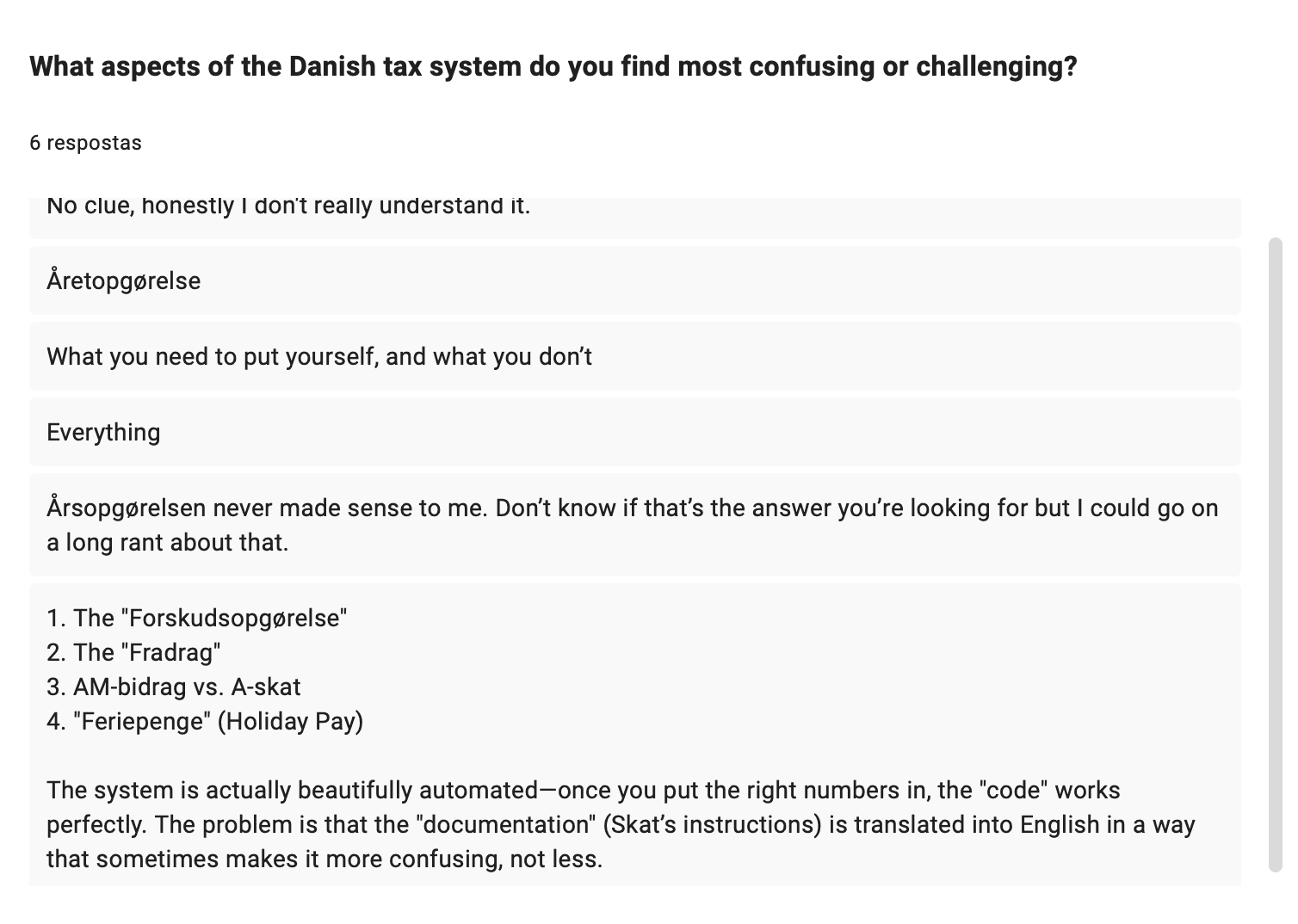
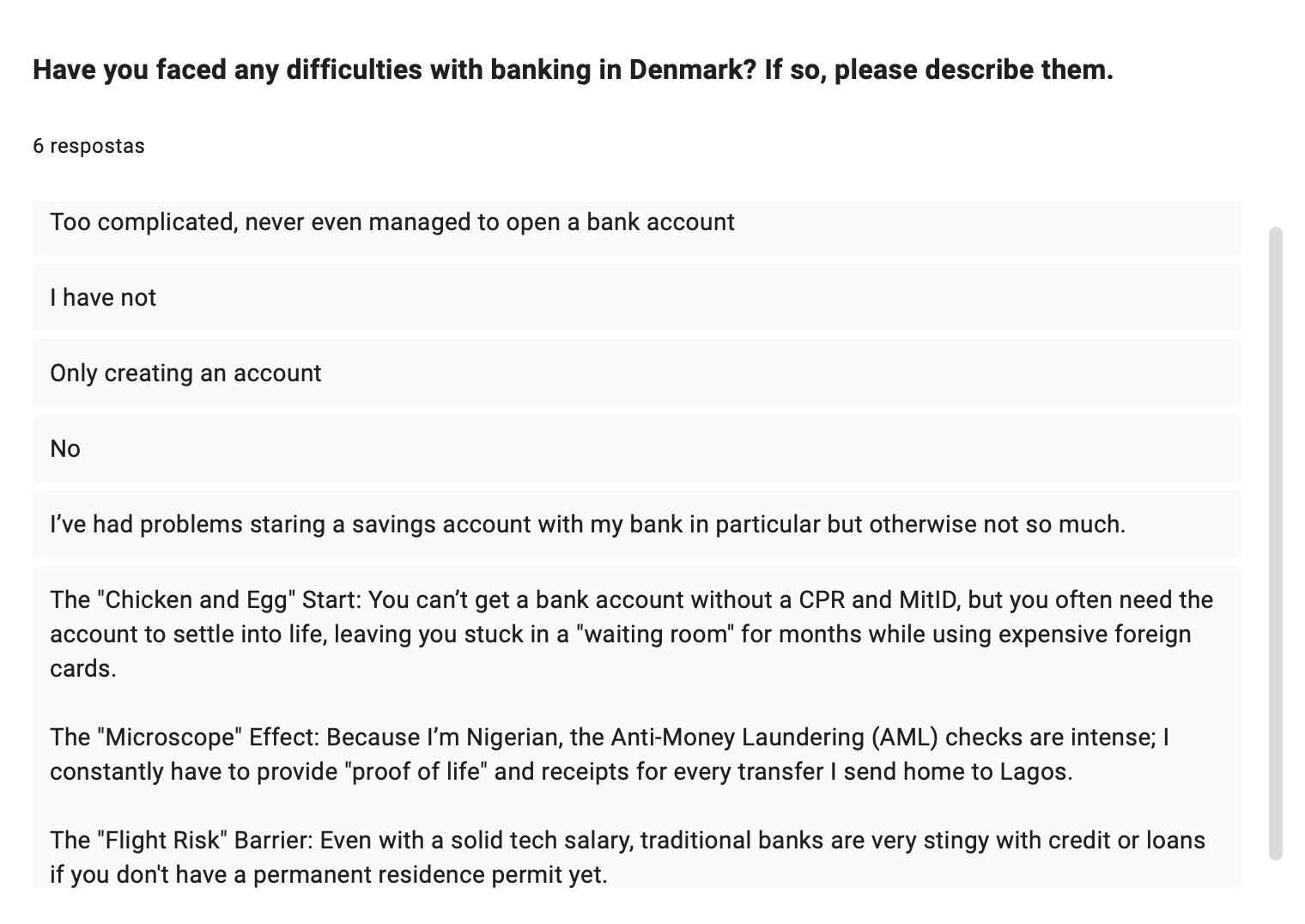
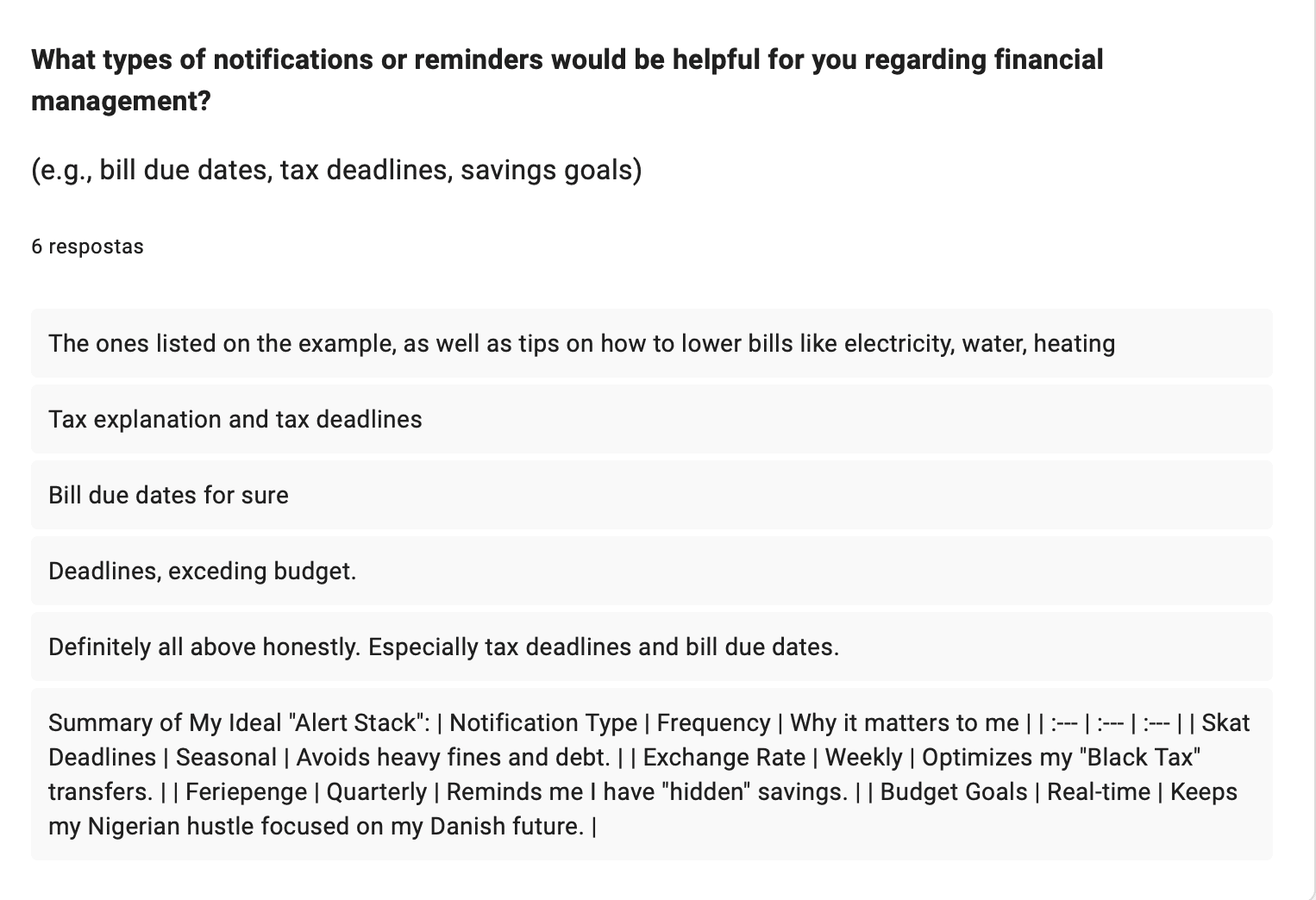
Financial uncertainty was frequently mentioned — particularly around preliminary income assessments, annual tax adjustments, insurance coverage, and pension schemes. However, as research deepened, a broader pattern emerged: financial confusion was rarely isolated. It was interconnected with CPR registration, MitID setup and digital public systems.
Finances were not the core issue — they were one part of a larger experience of navigating an unfamiliar ecosystem.
This insight fundamentally reshaped the project.
Initial Problem Framing:
How can an app help people living in Denmark understand, organize, and keep track of essential public systems — such as taxes, insurance, benefits, and services — in a way that feels clear and intuitive?
The app started with a narrower assumption: that newcomers primarily struggle with understanding the Danish financial system.
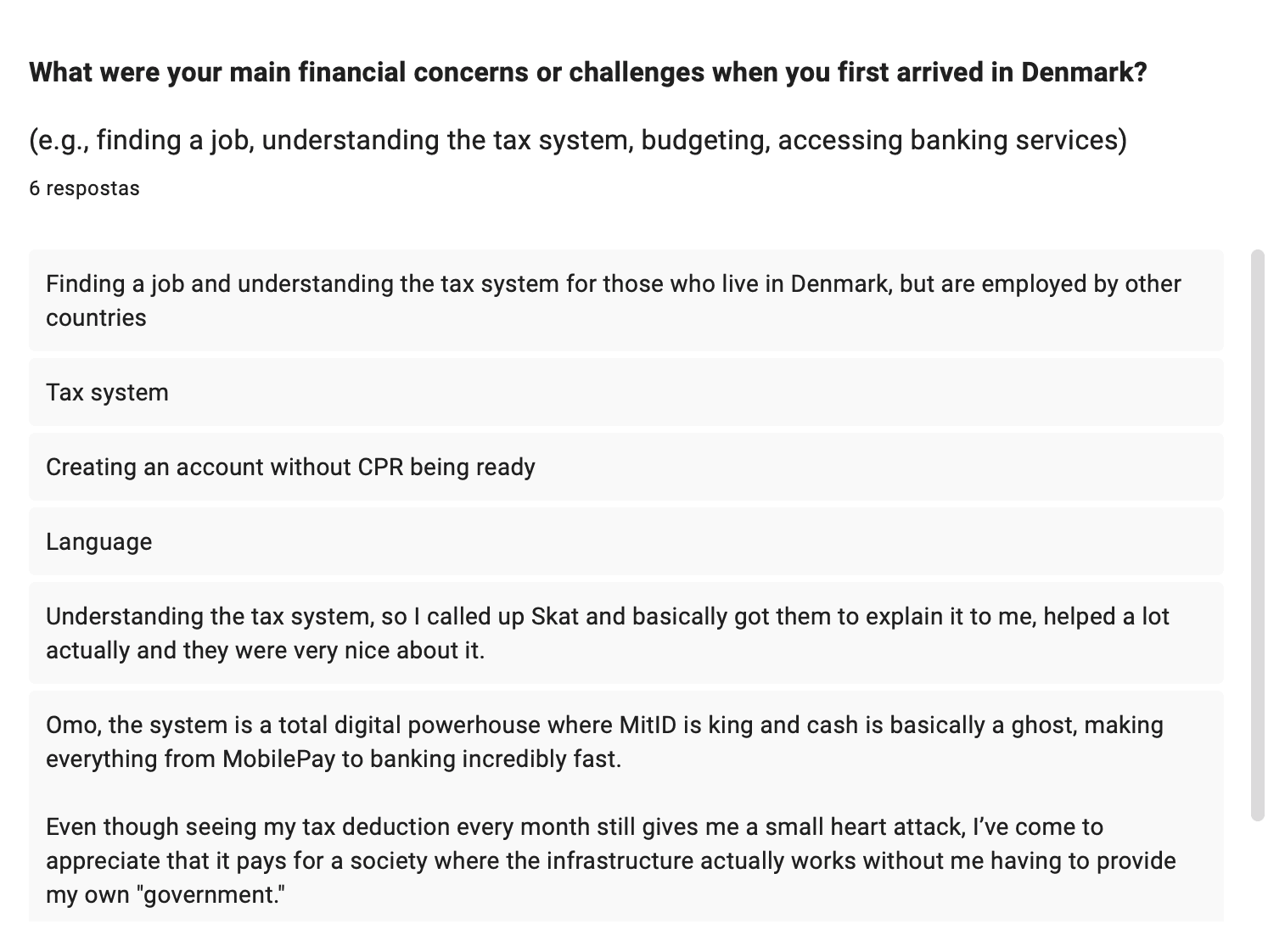
My initial hypothesis focused on taxes, income reporting, insurance requirements, and banking. To validate this assumption, I conducted exploratory research with international students, workers, and expats who had lived in Denmark from a few months to several years.
Through surveys, informal interviews, and observation of online expat communities, I asked participants to describe their most stressful bureaucratic experiences, moments of confusion, and situations where they feared making mistakes.
STRATEGIC SHIFT
The research revealed that building a purely financial helper would address only a symptom. The deeper issue was fragmentation and uncertainty.
Users were not simply asking: “How do I calculate my taxes?”
They were asking: “What applies to me? When does it apply? And how do I know I’m doing it correctly?”
This shifted the problem space from financial literacy to life orientation.
Makker evolved from a finance-focused concept into a structured navigation guide for Danish systems. Instead of acting as a calculator or budgeting tool, the app became a companion designed to reduce cognitive overload and guide users step by step through relevant processes.
This pivot was a critical learning moment. It reinforced the importance of allowing research to challenge assumptions and reshape direction rather than forcing solutions to fit an initial idea.
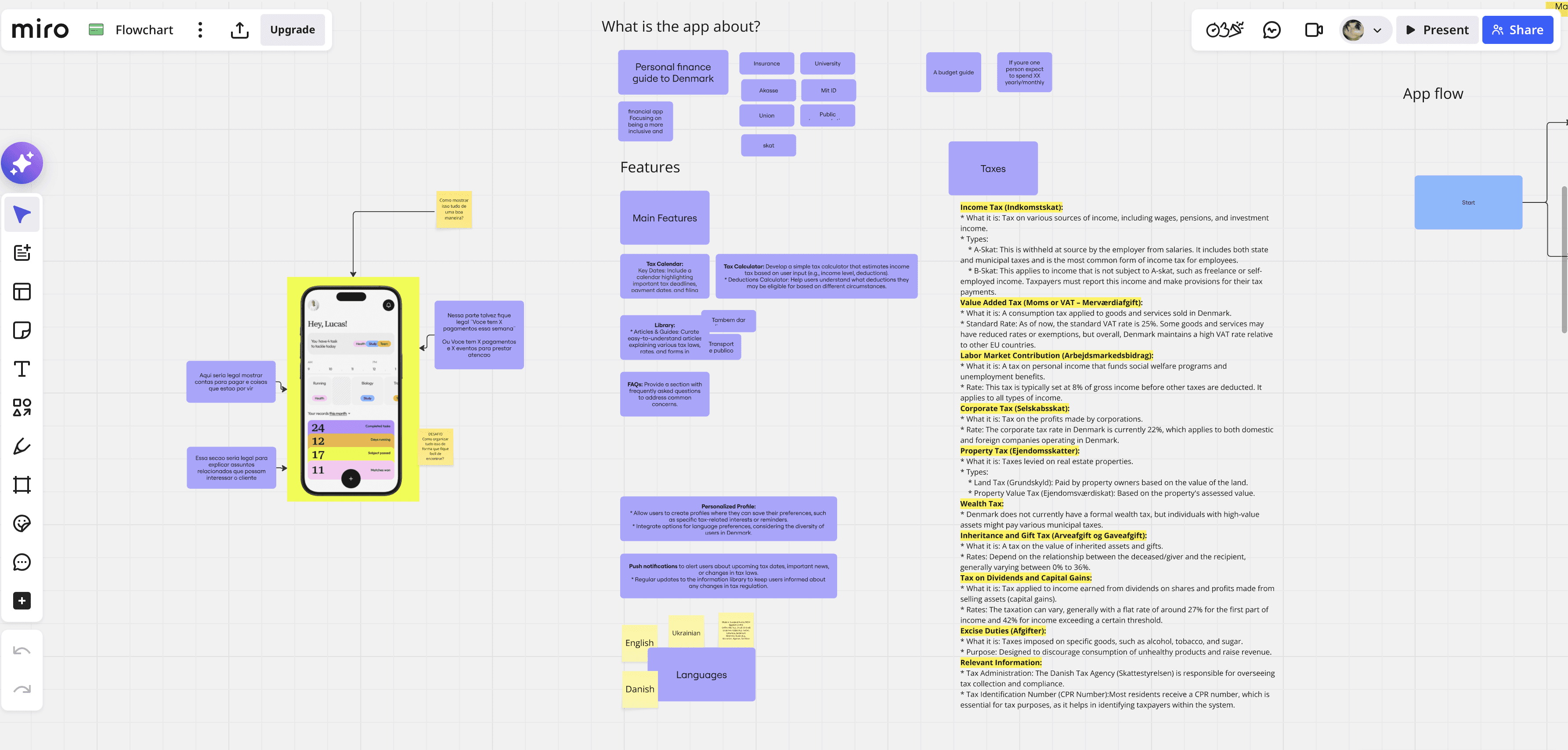
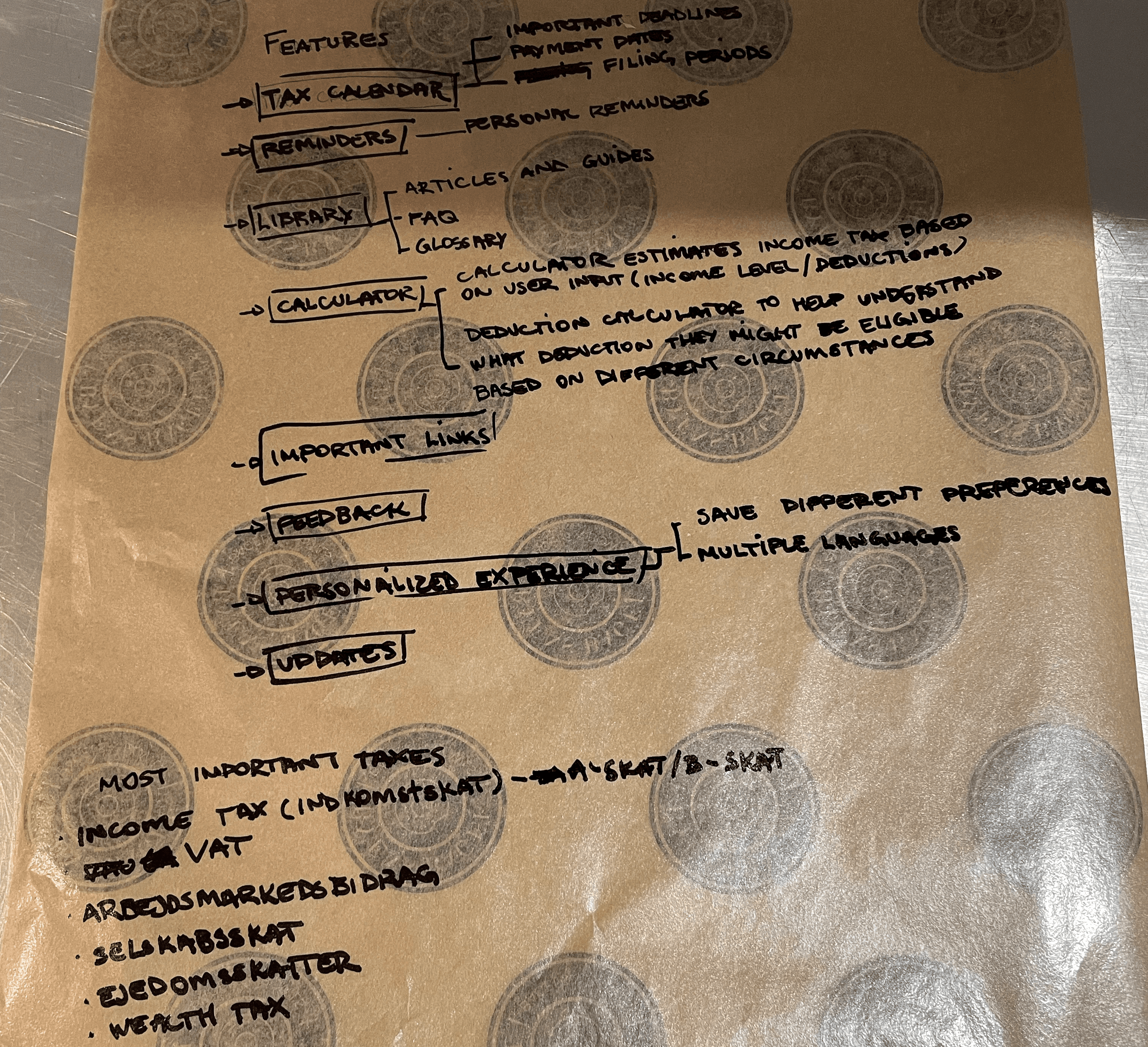
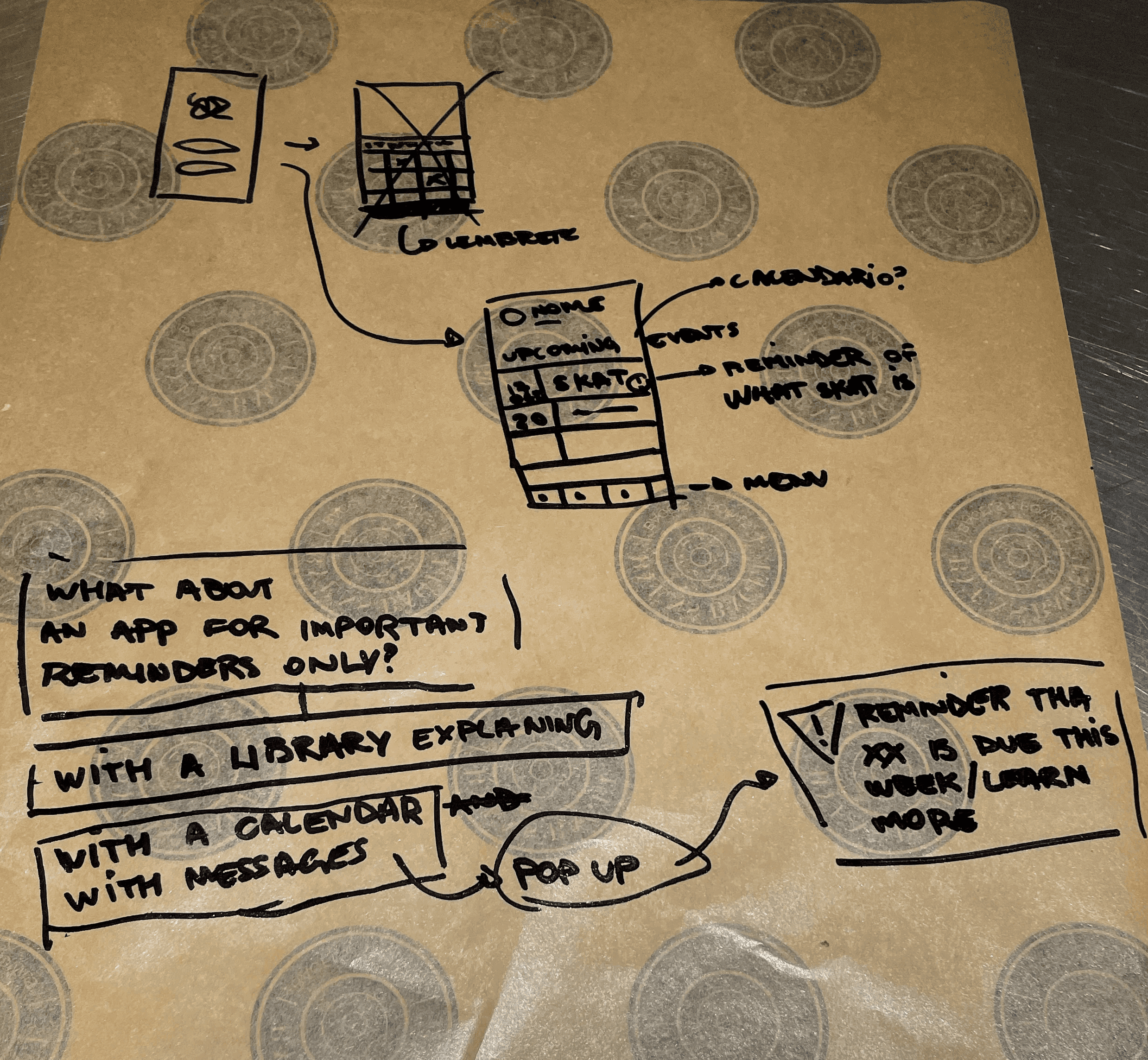
With the expanded direction defined, I began early conceptual exploration focused on structure rather than visuals.
Official platforms such as Skatteguiden, Borger.dk, and Ny i Danmark provide accurate information — but often in dense, institutional language. Information is distributed across multiple websites, and similar explanations are repeated in slightly different forms across platforms. For a newcomer unfamiliar with terminology, this creates confusion rather than clarity.
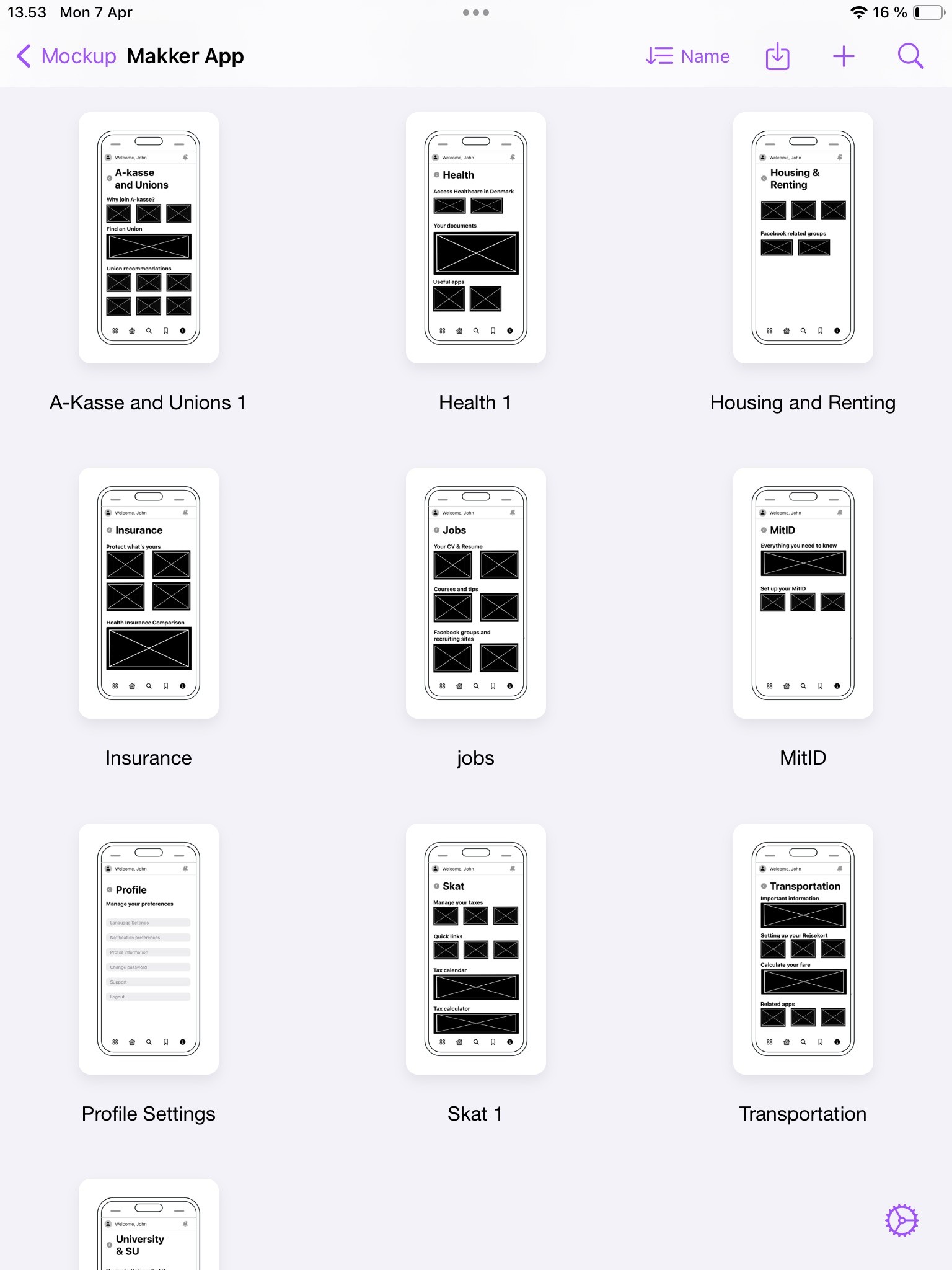
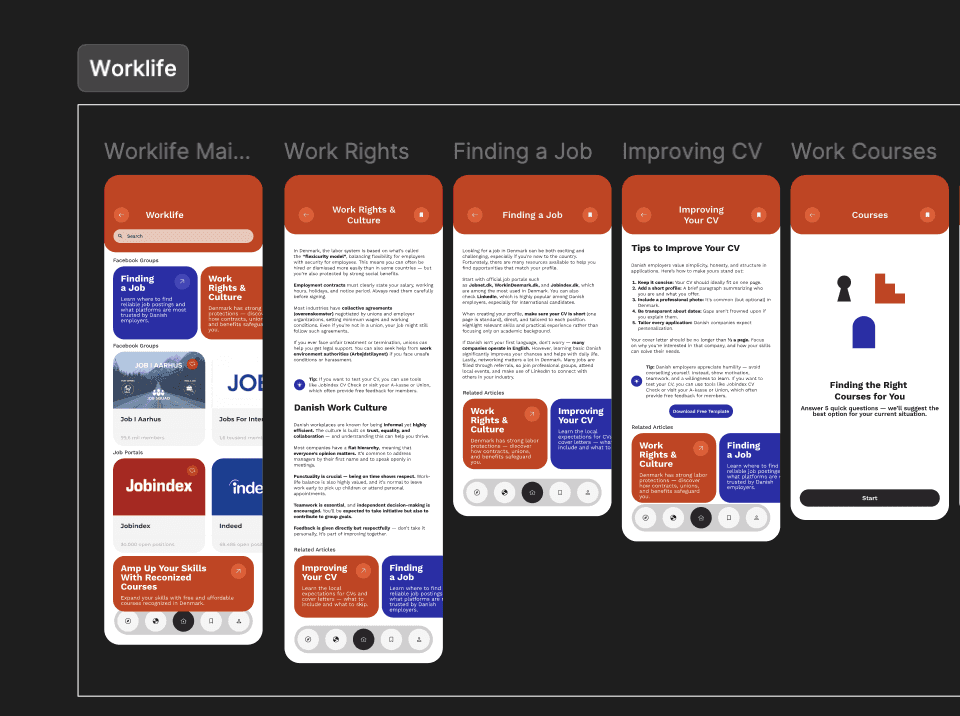
Instead of organizing content by institution (e.g., SKAT or Borger.dk), I reorganized the experience around life situations. Categories such as Taxes, Health, Insurance, Work, Documents, and Deadlines became the structural backbone.
This shift from system-centered organization to user-centered organization was deliberate. People think in terms of needs, not institutions.
Newcomers in Denmark often struggle to understand essential systems such as taxes, insurance, public services and digital tools like MitID. Information exists, but it is fragmented across multiple platforms, written in complex language, and difficult to navigate — especially for non-native speakers.
4. No centralized Solution
There is no single app that combines explanations, reminders, documents and guidance in one intuitive experience.
The main goals were to simplify complex topics such as taxes and insurance into understandable language, reduce cognitive overload by organizing information in one place, help users stay on track with important dates through reminders, support users in multiple languages, and create a calm, trustworthy interface that reduces stress rather than adds to it.
USER FLOW
As the structure matured, I redesigned the architecture to improve clarity and scalability.
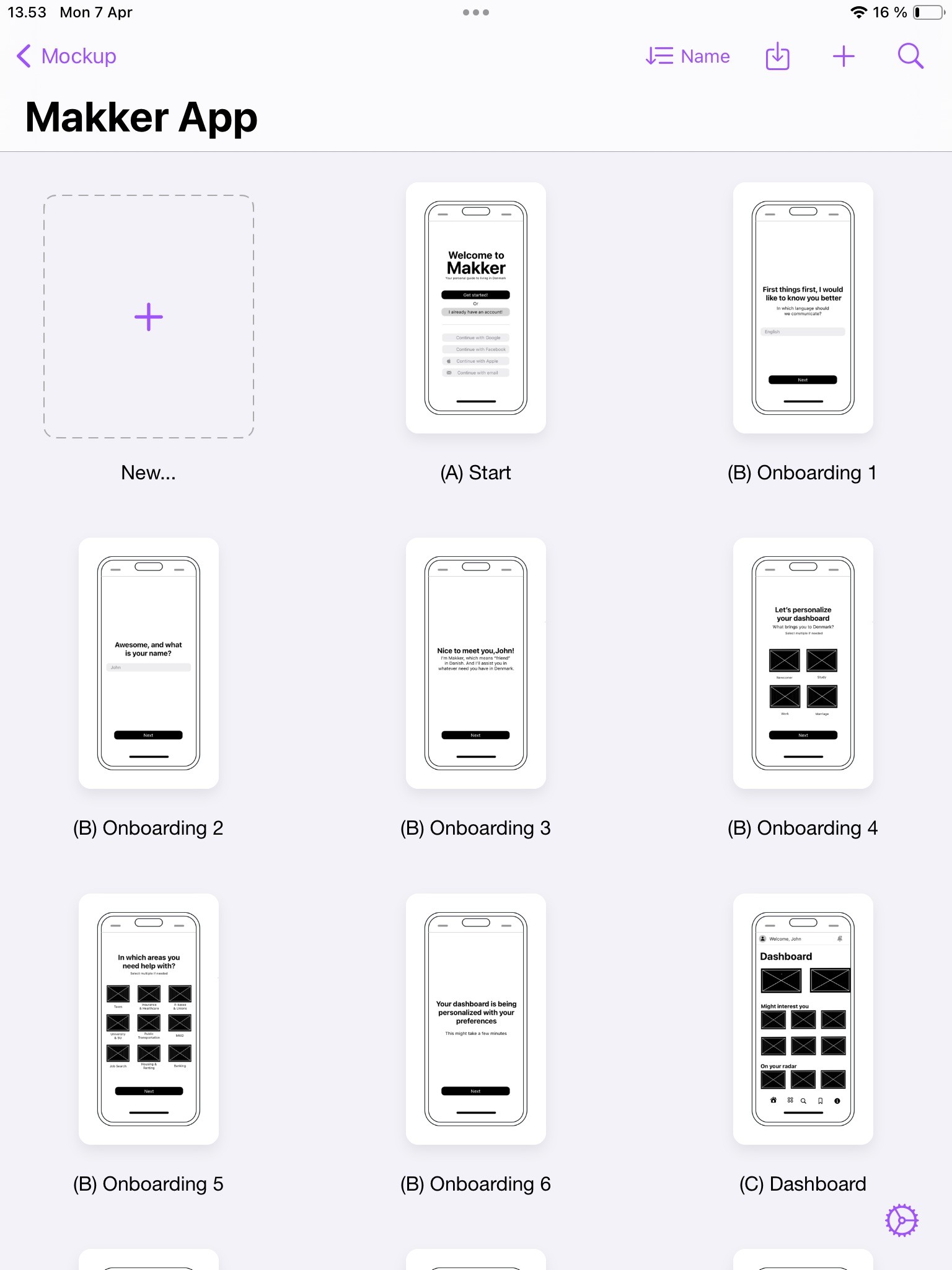
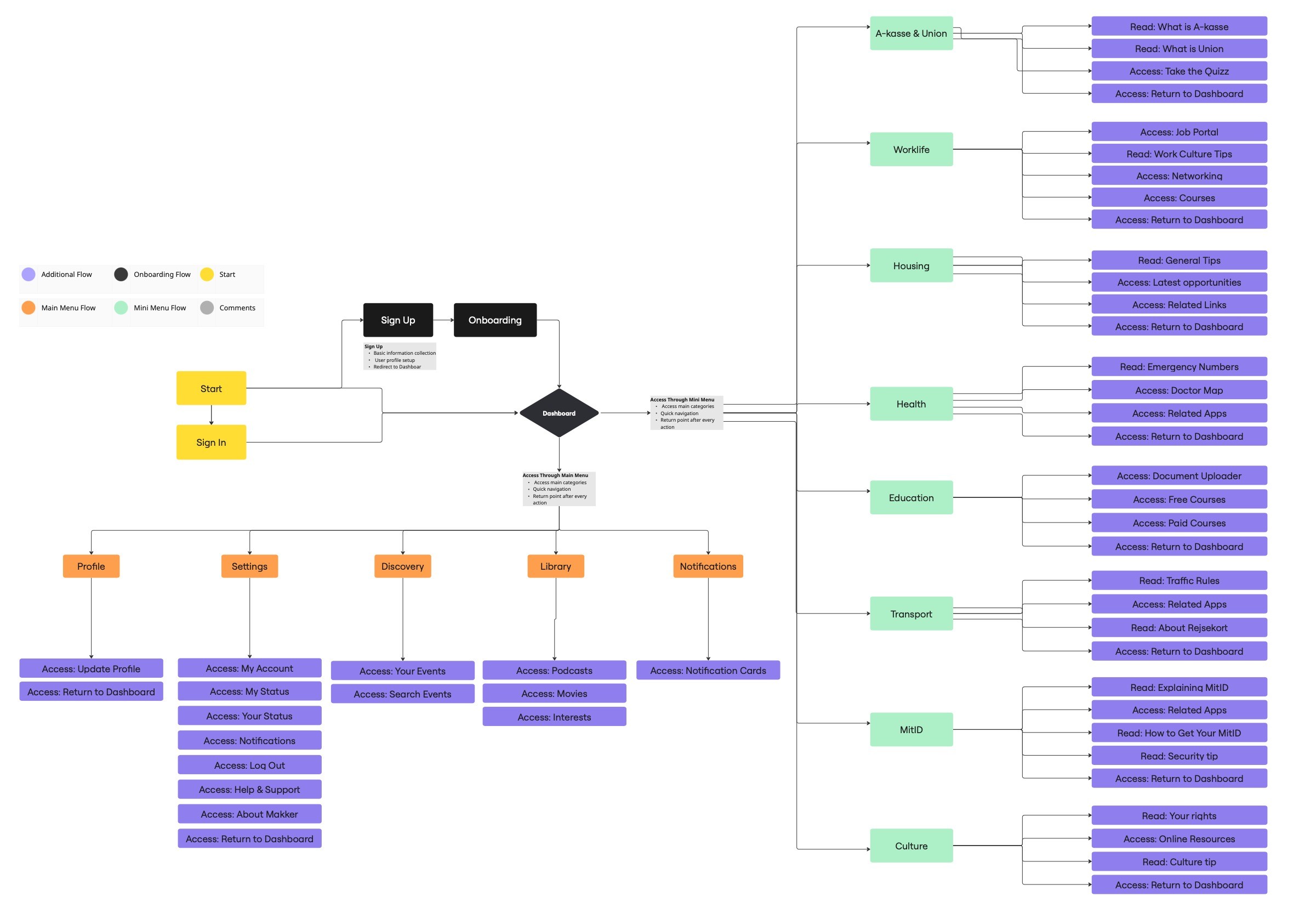
The primary flow moves from Start/Login directly to a personalized Dashboard. The dashboard functions as the central orientation point — presenting relevant tasks, deadlines, and recommended actions based on the user’s profile.
From there, I divided the experience into two secondary flows:
A structured exploration flow accessed through the main menu, allowing users to navigate core categories such as taxes, health, or insurance in a guided manner.
A utility-based flow accessed through a mini-menu, focused on supportive tools such as document storage, reminders, and profile adjustments.
This separation was intentional. The main flow supports guidance and learning, while the secondary utilities support organization and ongoing management.
By distinguishing between “understanding” and “managing,” the app avoids overwhelming the user while maintaining functional depth. The structure encourages progressive engagement: users first gain clarity, then take action, then return to the dashboard for the next step.
DESIGN PRINCIPLES
RESEARCH
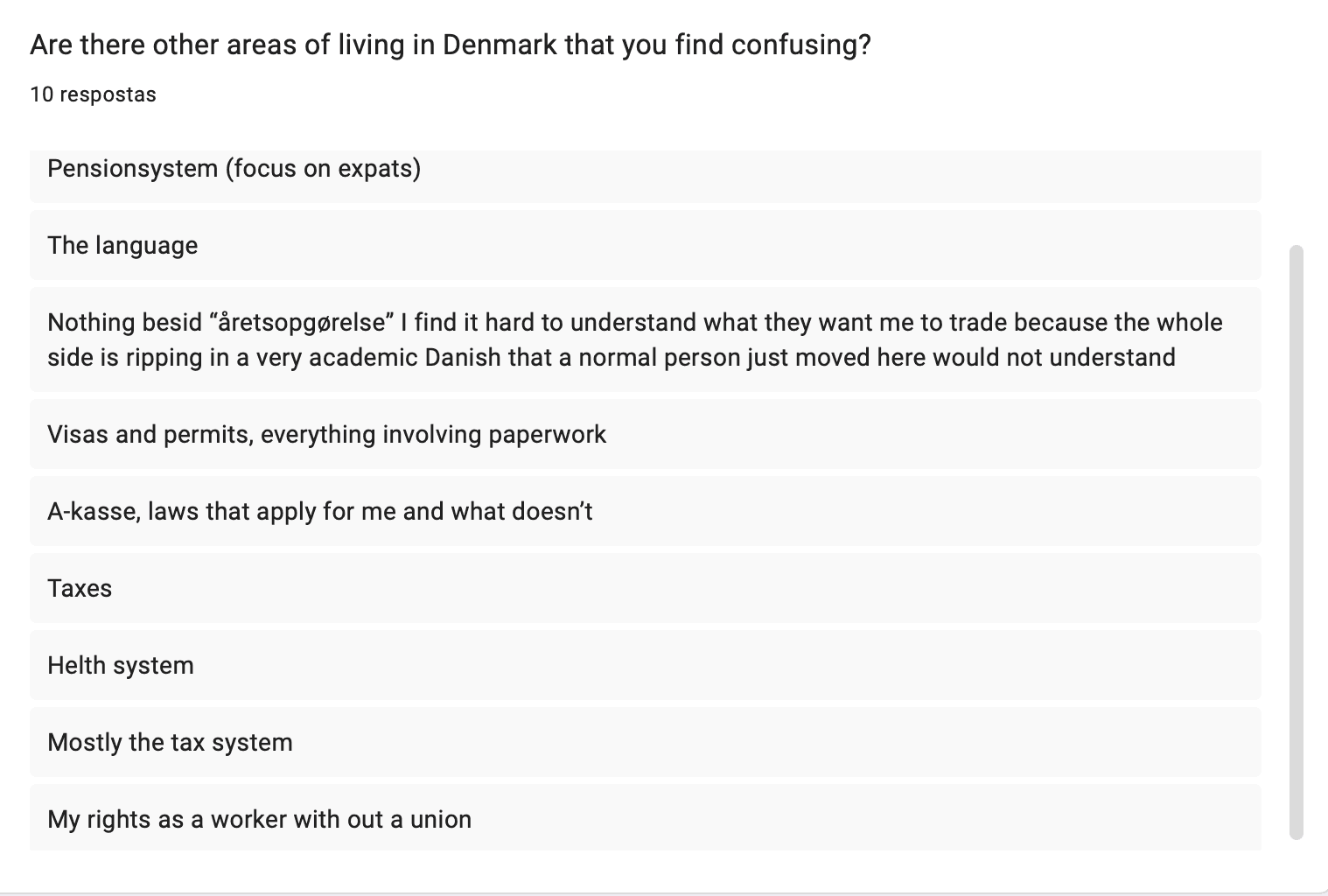
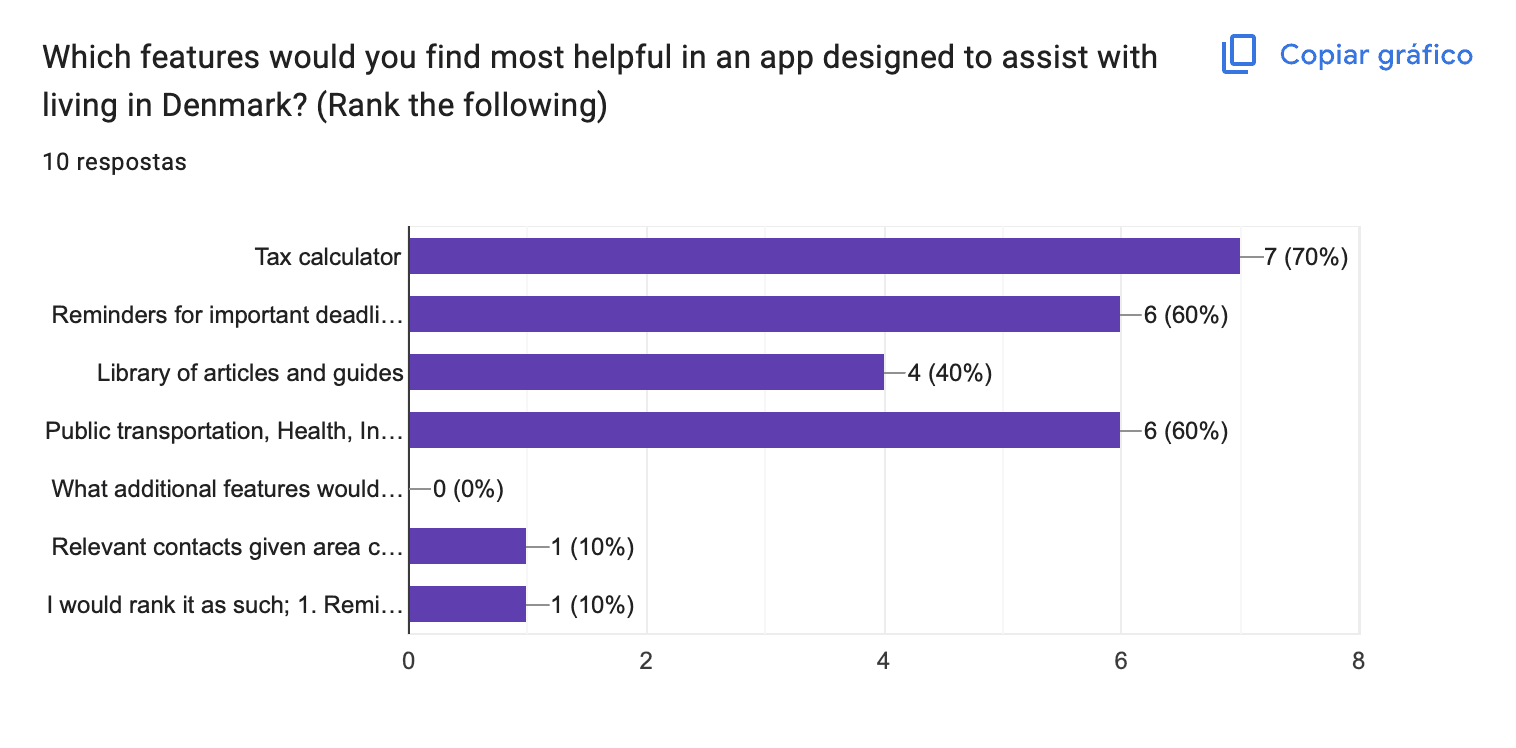
To validate that Makker addressed a broader problem beyond personal experience, I conducted surveys and informal interviews where the participants were asked about their most confusing bureaucratic processes, emotional stress points, and the tools they currently rely on.
While the sample size was limited and informal, the findings strongly supported the existence of a systemic usability gap. Patterns emerged consistently around fragmentation, unclear deadlines, and difficulty understanding "official" language.
63%
International students
26%
Foreign professionals / workers
11%
Long-term residents (5+ years in Denmark)
Patterns emerged consistently around fragmentation, unclear deadlines, difficulty understanding official language, and uncertainty about whether tasks were completed correctly.
FIRST DRAFT
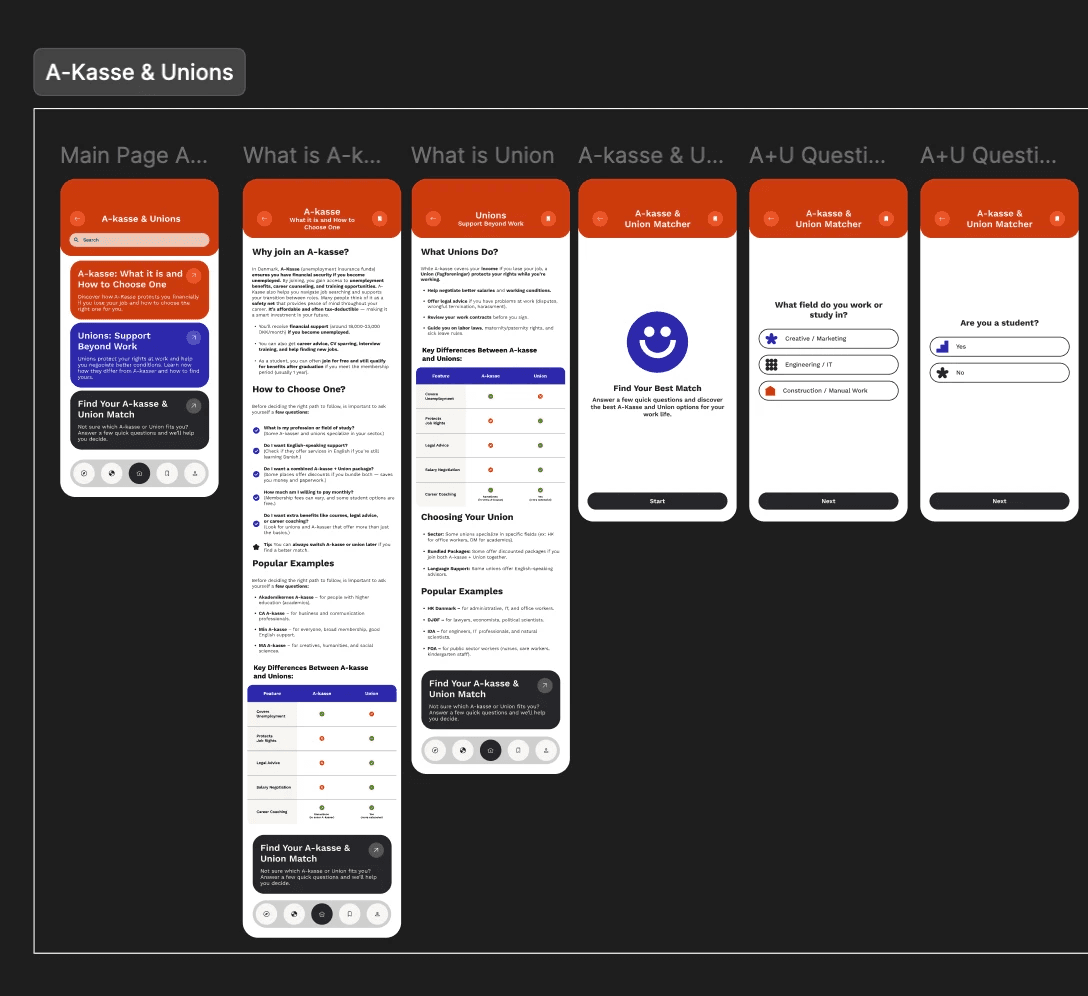
The first draft focused entirely on structure. It was low-fidelity and intentionally minimal. Typography was generic, colors were placeholders, and components were basic. The objective was to validate navigation logic and content hierarchy. The initial wireframes revealed that the dashboard felt overloaded and that category prioritization was unclear. Although everything was technically accessible, the experience lacked focus.
This phase reinforced the importance of progressive disclosure and prioritization.
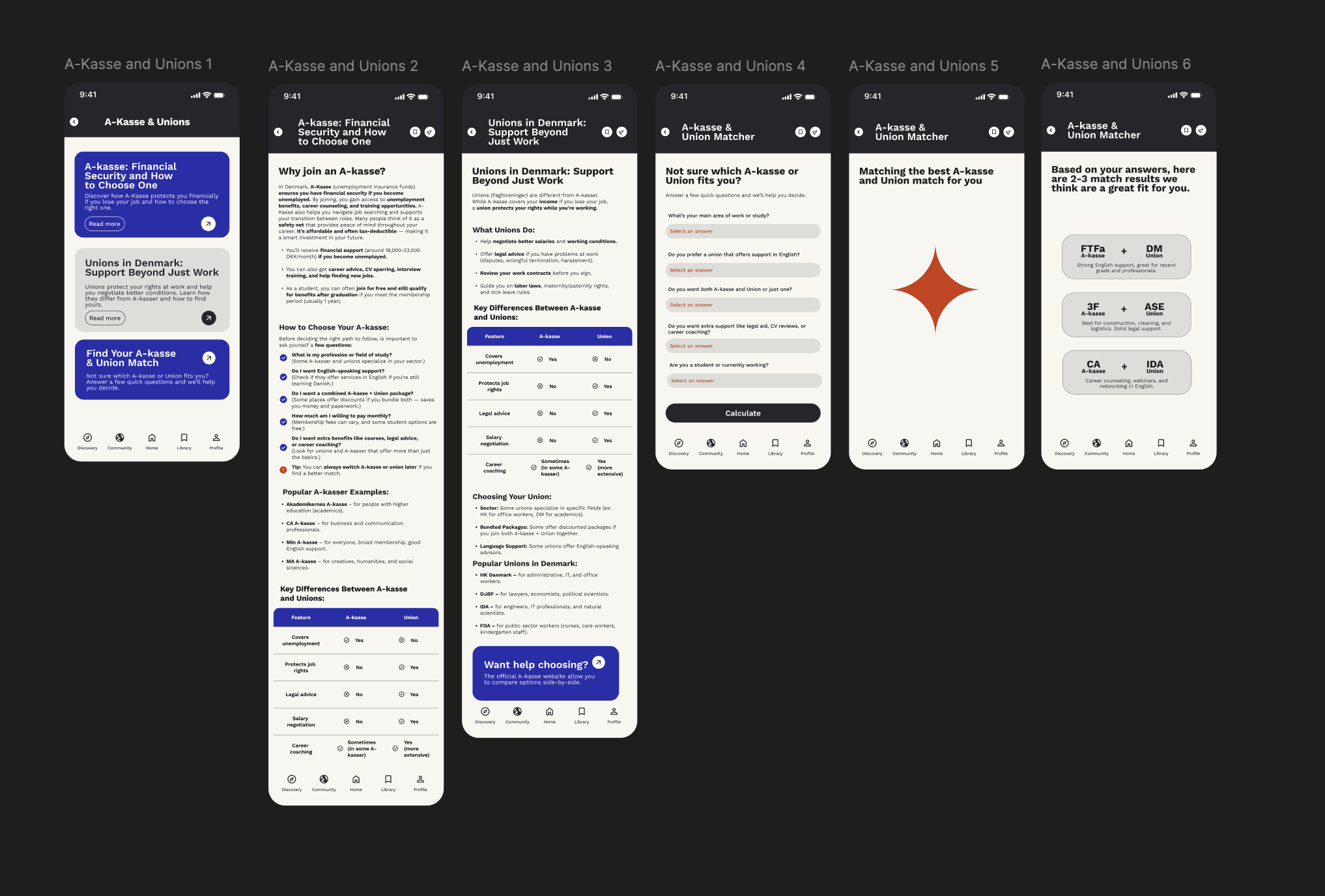
SECOND DRAFT
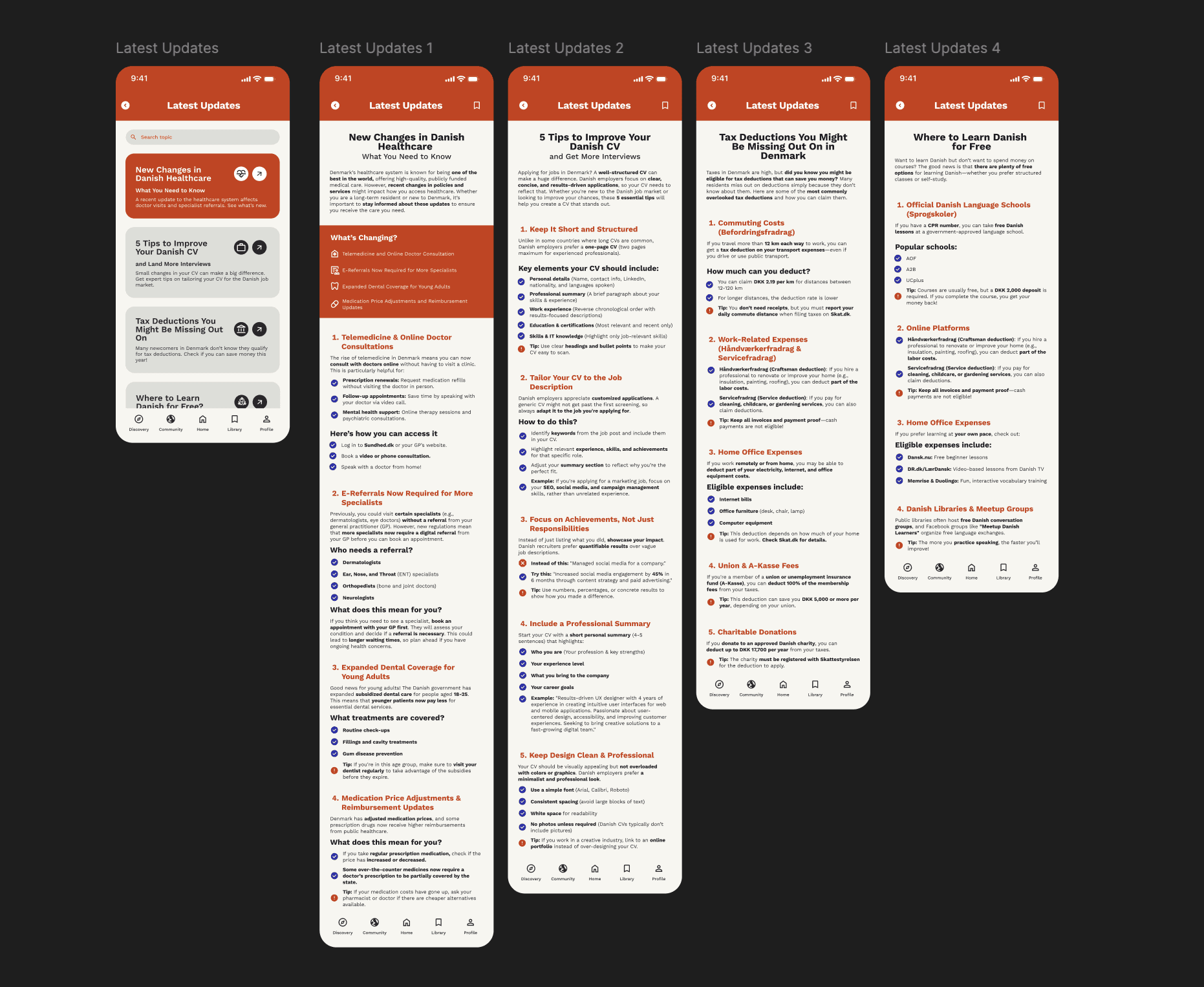
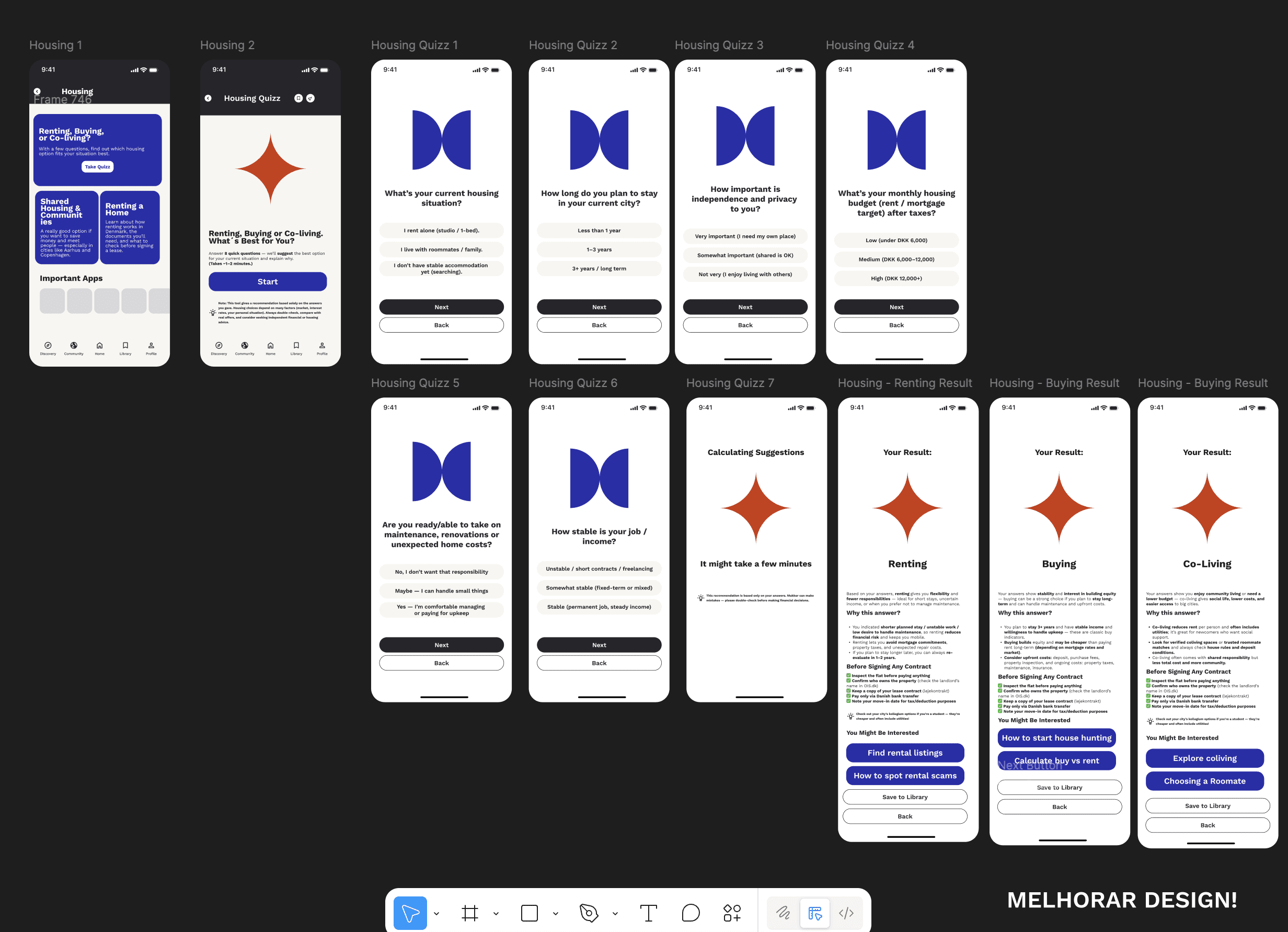
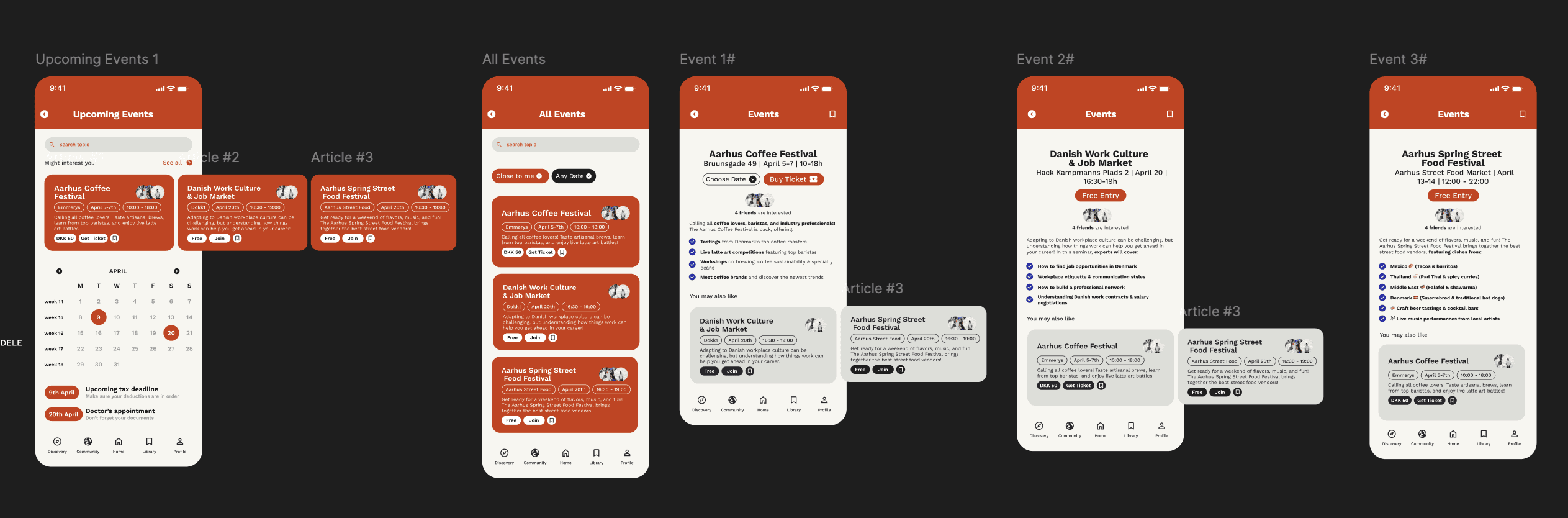
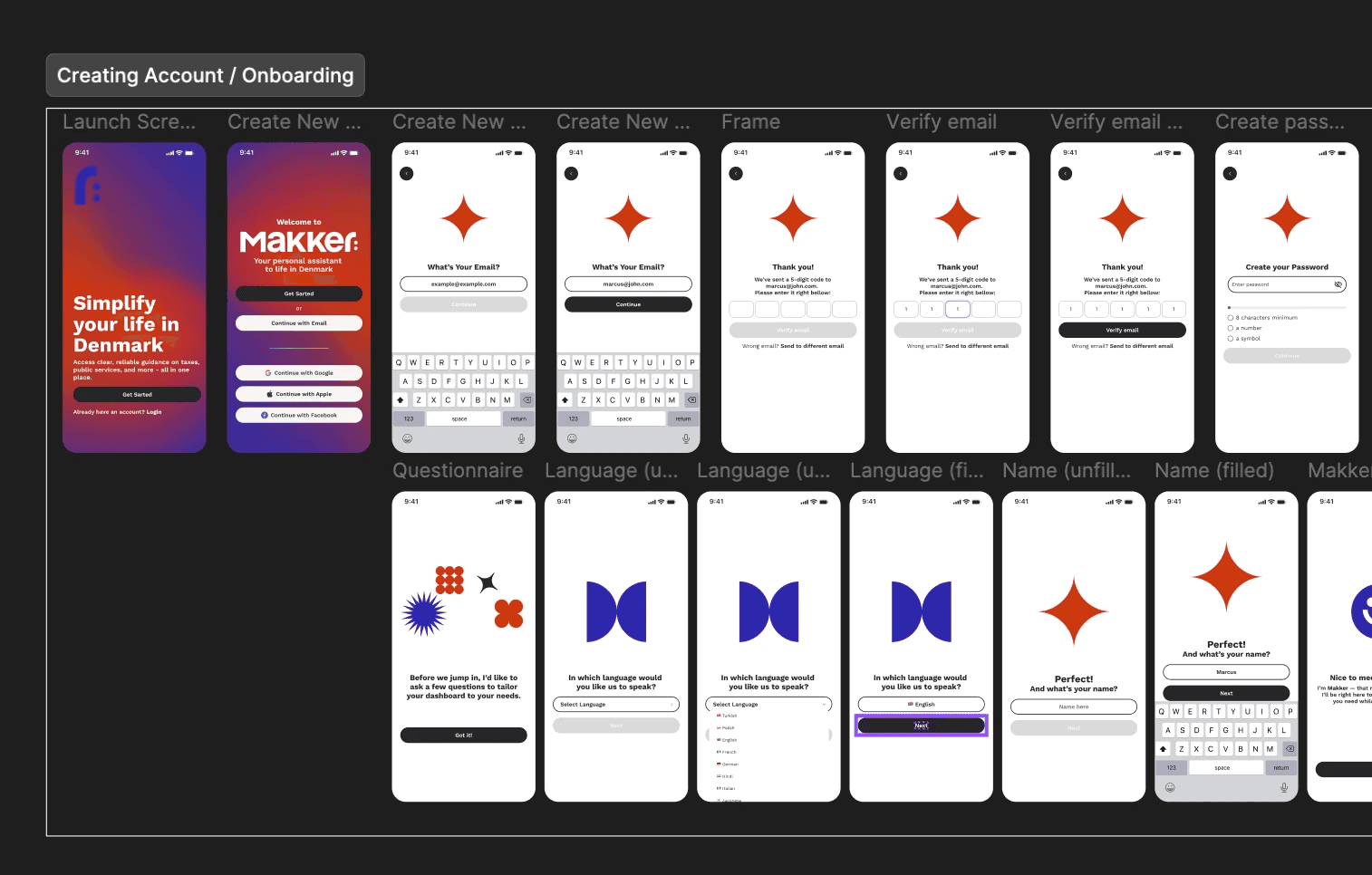
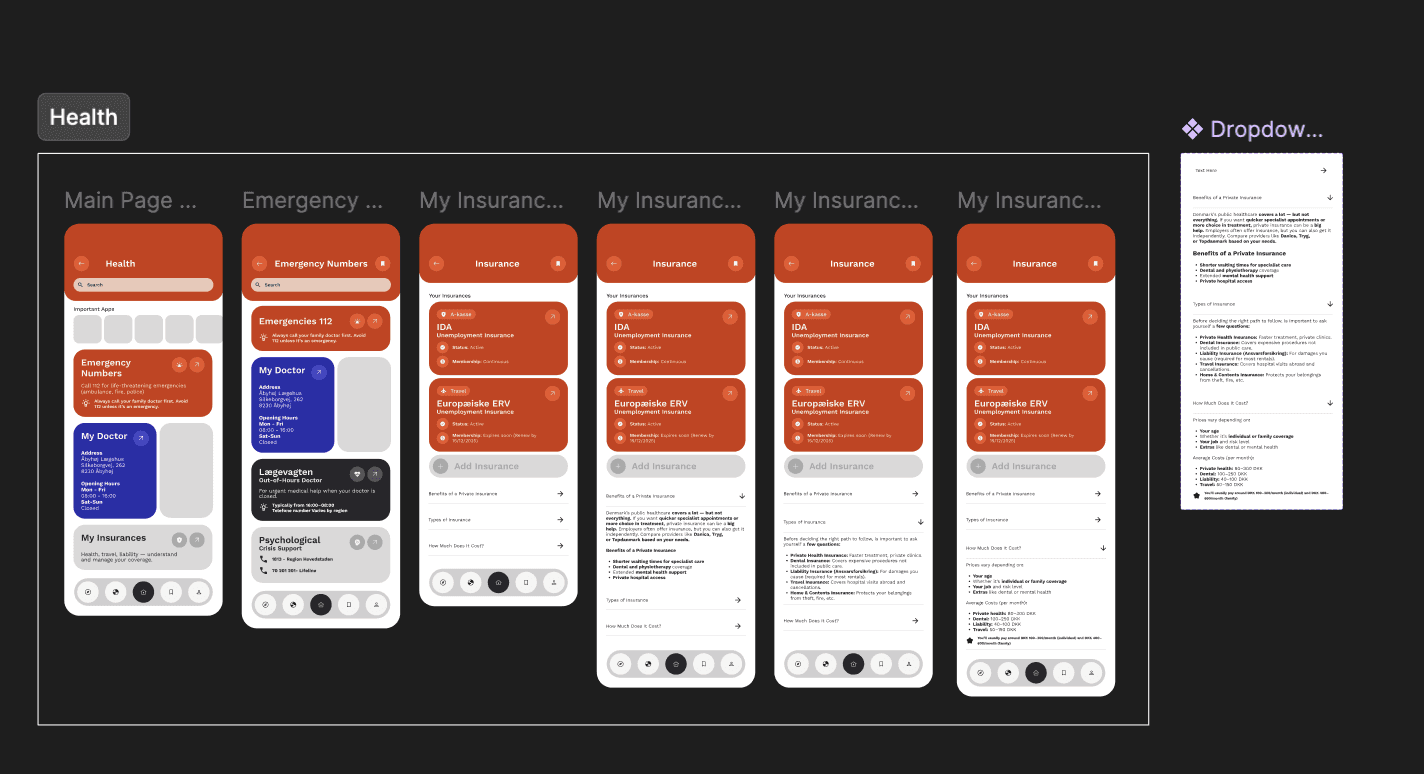
In the second draft, I simplified hierarchy and reduced visual noise. Spacing improved, categories were consolidated, and the dashboard shifted from being an information hub to functioning as a guidance system.Upcoming deadlines became visually prominent. Recommended actions were highlighted. The tone evolved from instructional to supportive.However, during this stage, I began questioning the visual identity and overall cohesion. The interface felt structurally improved but visually generic. It lacked personality and did not fully reflect the emotional reassurance the concept aimed to provide.This led to another iteration — refining both flow and visual system simultaneously. Transitions became smoother, navigation clearer, and the relationship between dashboard and secondary flows more intuitive.The experience moved from feeling like a digital archive toward feeling like an assistant.
USER TESTING
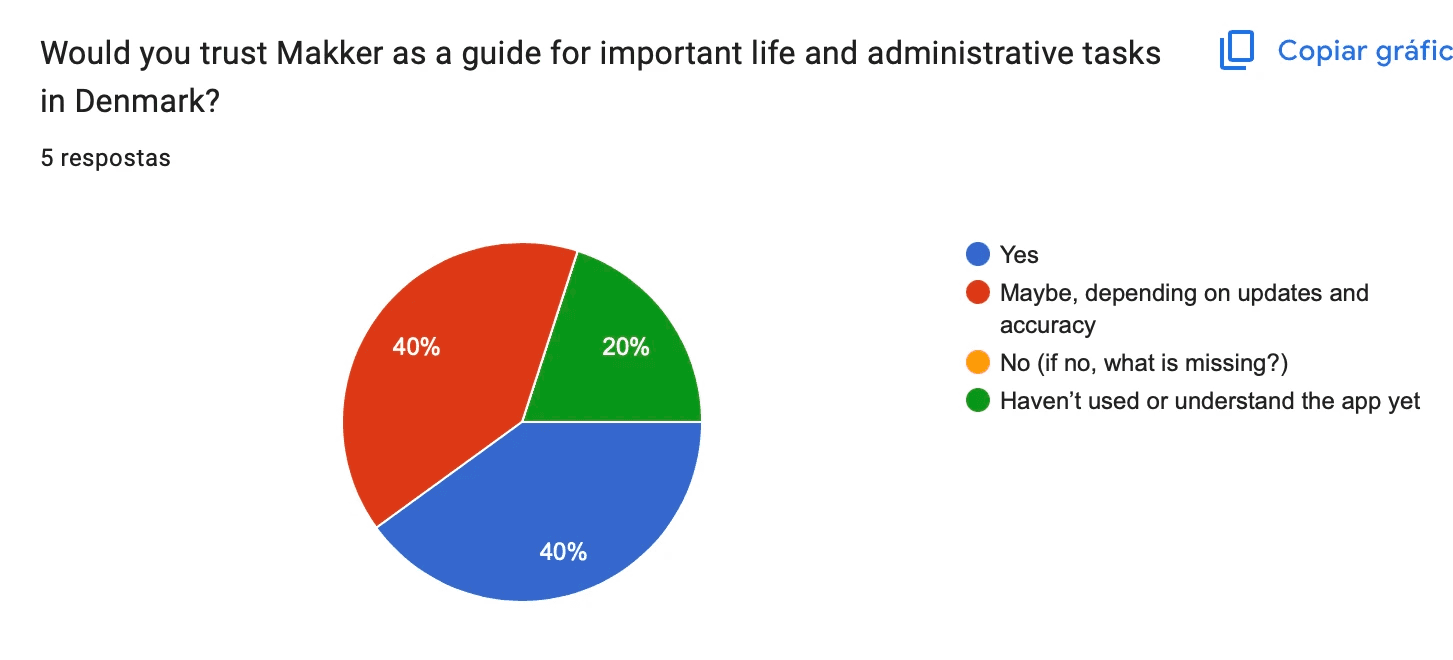
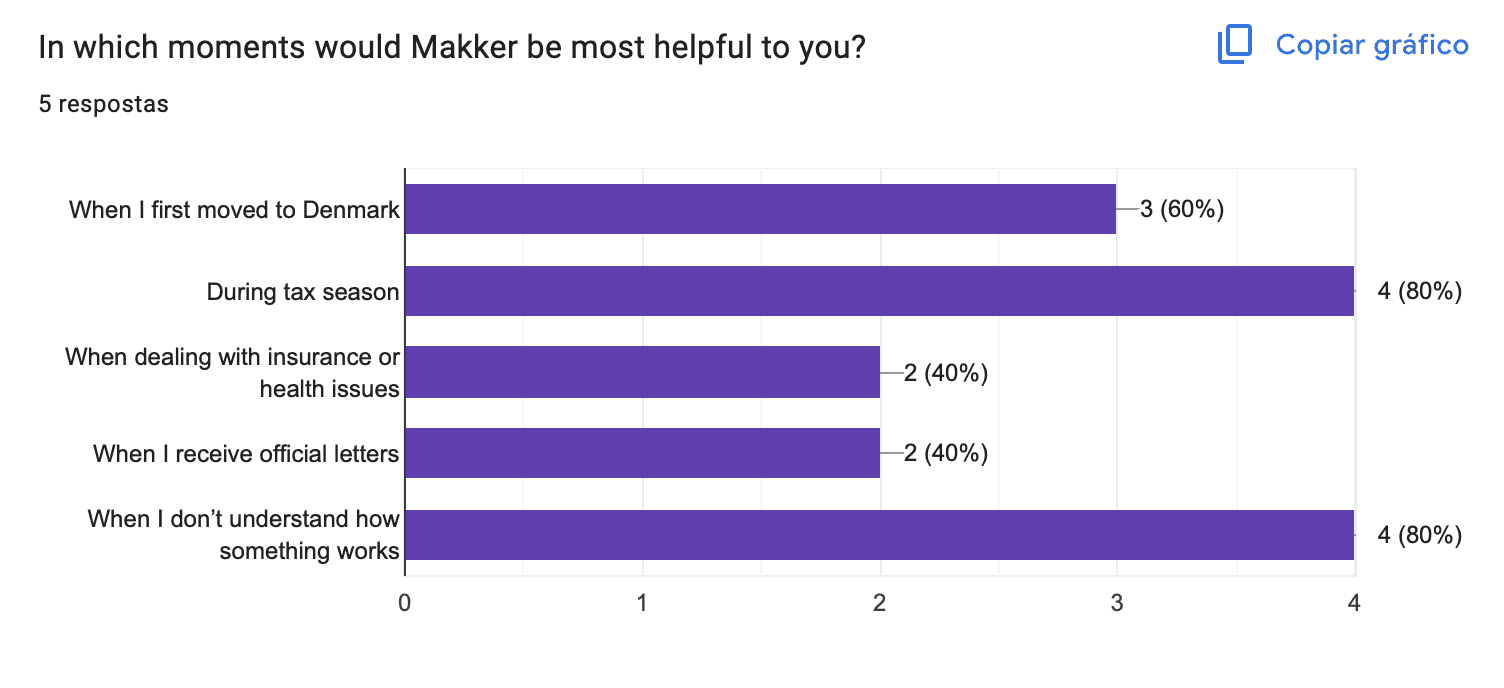
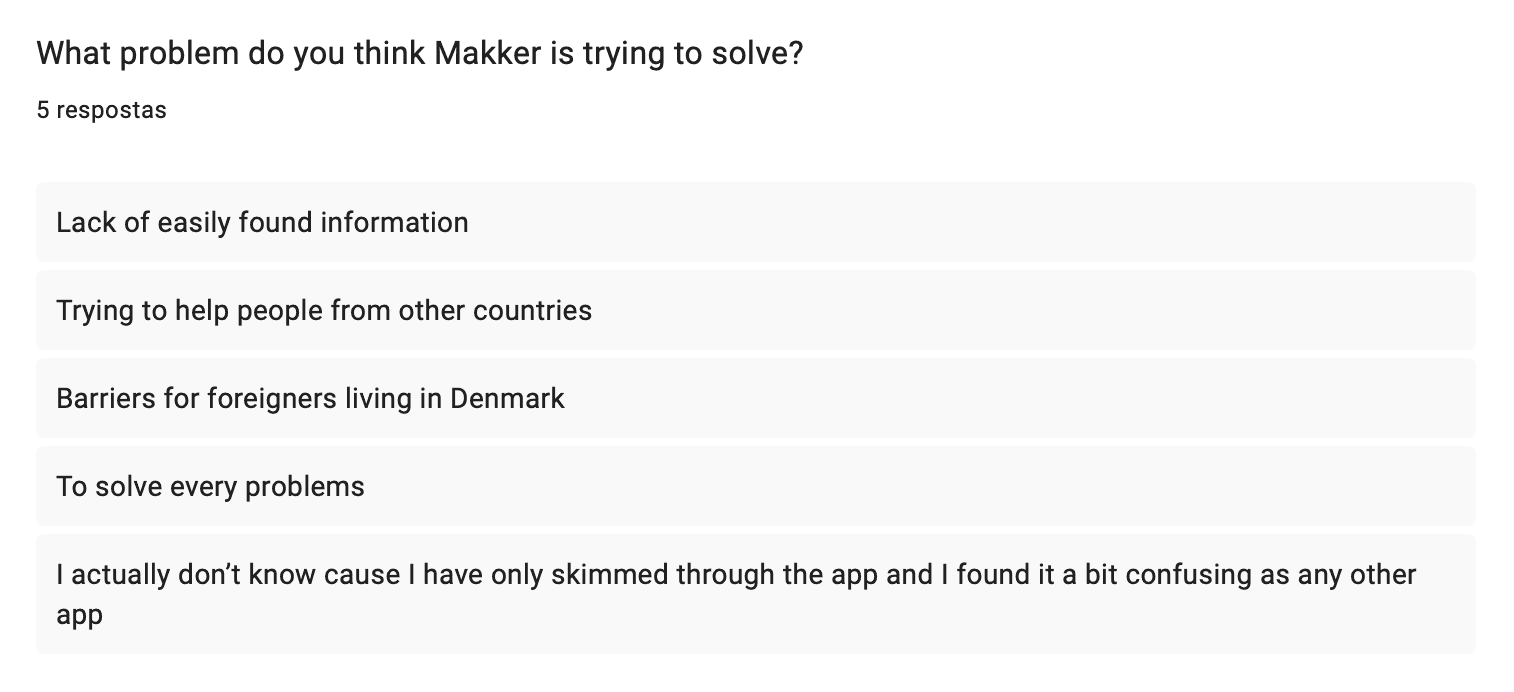
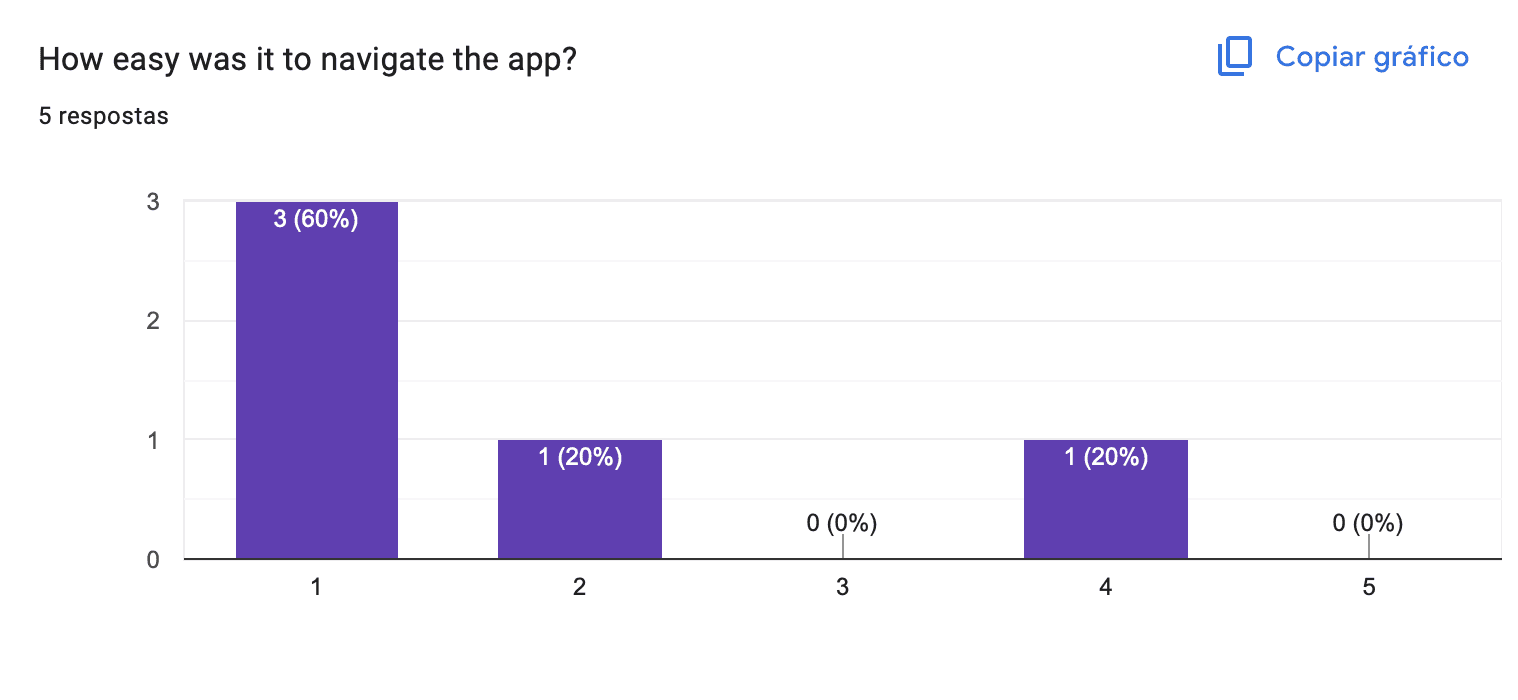
With a refined prototype, I conducted structured user testing sessions and distributed targeted surveys to international residents in Denmark. Participants navigated the prototype independently and answered questions about clarity, usability, and emotional perception.Testing also revealed areas for improvement. Some screens contained excessive explanatory text. Certain labels required simplification. Based on feedback, I reduced text density, strengthened visual hierarchy, refined microcopy, and incorporated clearer visual cues.
FINAL DESIGN
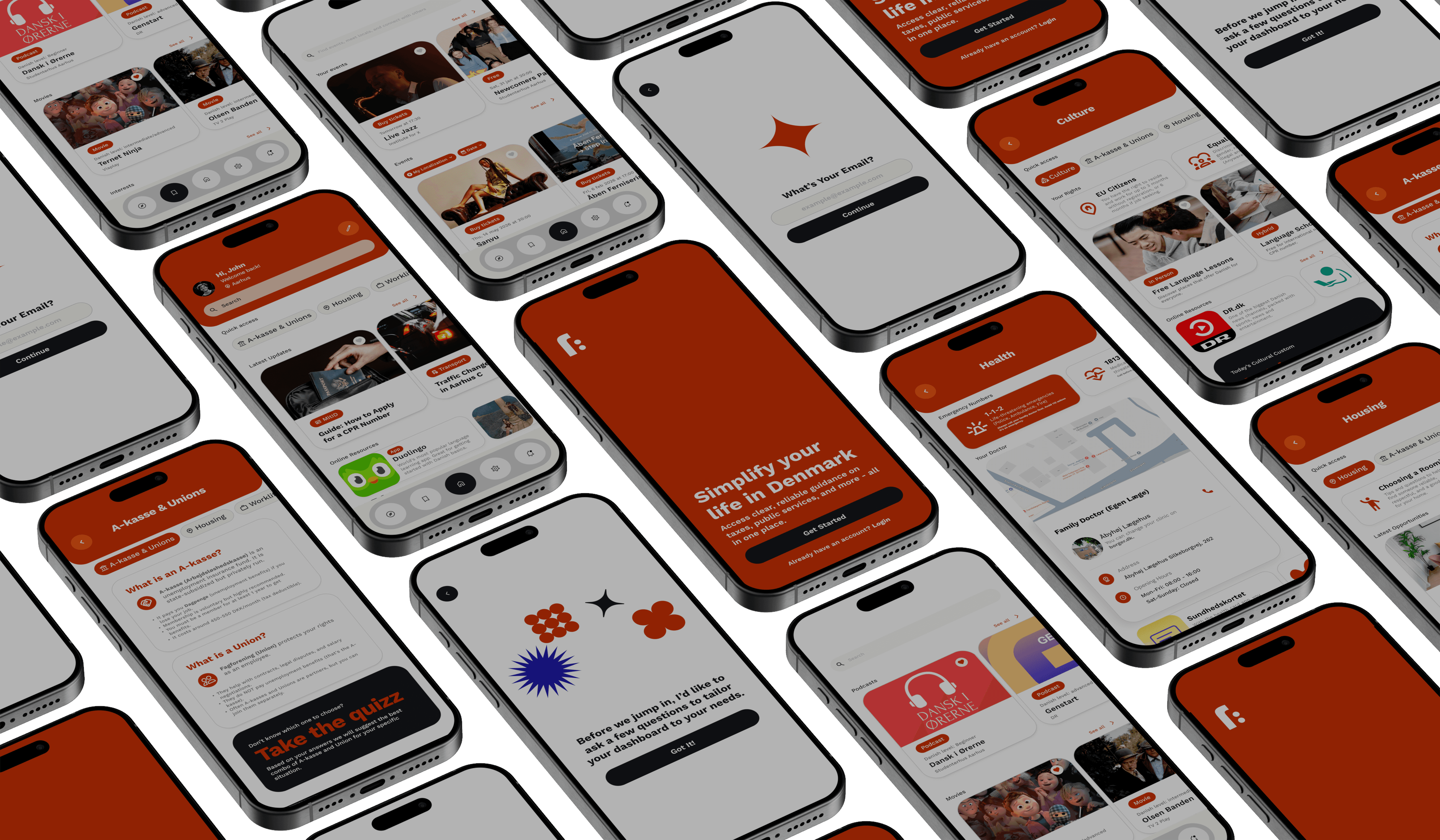
The final color palette combines red and cream. Red was chosen as a subtle reference to Denmark’s national identity, but used carefully to avoid associations with warning or error states. Paired with a warm cream tone, the red becomes grounding rather than alarming. The combination balances familiarity with calmness.
Additionally, I integrated imagery within cards to provide quick visual recognition. Instead of relying solely on text labels, visual cues help users identify categories more intuitively — particularly beneficial for users navigating in a second language.
The final design emphasizes clarity, warmth, and structured guidance.
Makker was developed independently over approximately one and a half years while I was simultaneously building foundational UX/UI skills, learning Figma, exploring basic HTML and CSS, and navigating life in Denmark. Beyond the product itself, the process strengthened my UX fundamentals, research skills, structural thinking, and interface design capabilities.
Makker is not a finished product. It is a validated concept with strong potential for further development. Future improvements could include enhanced accessibility testing, a functional tax calculator, formal usability studies, and potential partnerships with municipalities or public institutions.At its core, Makker demonstrates my ability to identify a real problem, conduct research, pivot strategically, and translate complexity into structured, human-centered solutions.
With collaboration, resources, and continued iteration, the concept could evolve into a tool that meaningfully supports thousands of people navigating life in Denmark.
MORE PROJECTS